Pancake Soufflé Muffins with Strawberry-Maple Syrup

These muffins are perfect for a special Sunday brunch, whether for Easter (like today) or any other “impress your guests” type of occasion. At first I was put off by the confusing aspect of how to eat them (muffin says hands, syrup says fork) but then I realized that essentially it’s a fluffy yet substantial pancake, so of course a fork is the right (only) choice. These had a really lovely texture and paired perfectly with the strawberry-maple syrup.

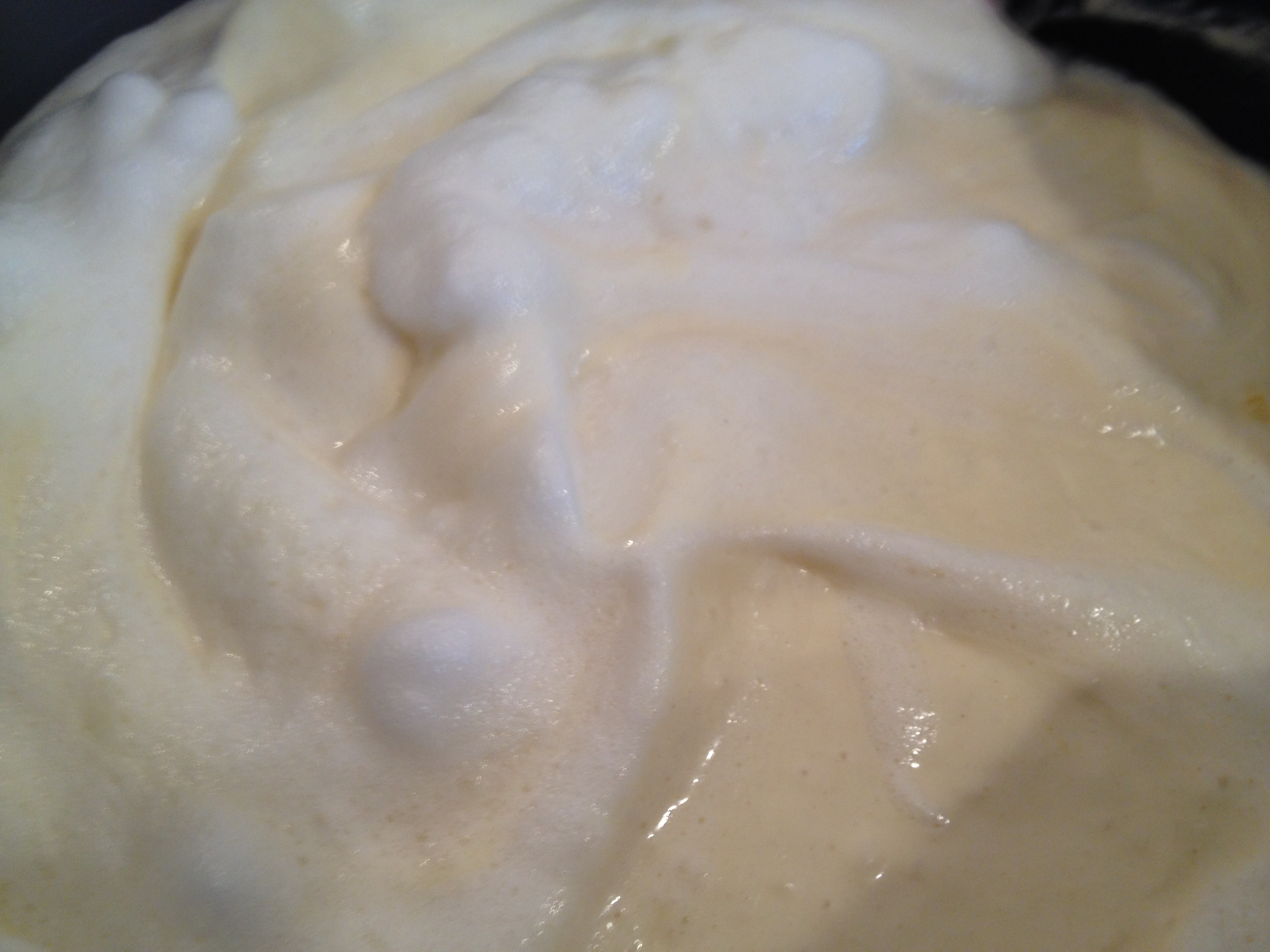
This is what the batter looked like shortly before scooping it into the muffin pans:
You don’t hear all of the “Oh no! My souffle is falling!” jokes these days like in my childhood (and happy that comedy has progressed beyond failed souffles and the old pie-in-the-face), although I did have a bit of a panic that my souffle muffins would fall/fail. But behold! They are risen! I won’t quite call it a miracle as much as a meticulous following of directions, though.

Aren’t they pretty?

 

Pancake Soufflé Muffins with Strawberry-Maple Syrup by Bill Telepan, Fine Cooking, March 2011, Original Recipe Here

Serves 12, Yields 24 muffins

For the muffins
Nonstick cooking spray
10-1/2 oz. (2-1/3 cups) all-purpose flour
4-1/2 oz. (1 cup plus 2 Tbs.) cake flour
2 tsp. baking soda
2 tsp. baking powder
1 tsp. kosher salt
6 large eggs, separated and at room temperature
3/4 tsp. cream of tartar
3 oz. (6 Tbs.) unsalted butter, melted and cooled slightly
6 T bs. granulated sugar
1 tsp. pure vanilla extract
3-1/3 cups buttermilk, at room temperature
Confectioners’ sugar, for sprinkling

For the strawberry syrup
1 cup pure maple syrup
1 cup quartered, hulled ripe strawberries

Make the MuffinsPosition a rack in the center of the oven and heat the oven to 400°F. Liberally spray two 12-cup muffin pans with the cooking spray.

In a medium bowl, mix the all-purpose flour, cake flour, baking soda, baking powder, and salt; set aside.

In a large, clean mixing bowl, beat the egg whites and cream of tartar with an electric hand mixer on medium-high speed to firm (but not dry) peaks, 2 to 3 minutes. Set aside.

In another large bowl, beat the egg yolks with the mixer on medium-high speed until thick, ribbony, and lemon-yellow, about 6 minutes. Add the melted butter, sugar, and vanilla; mix on medium-low speed until combined, about 30 seconds. Add one-third of the dry ingredients and mix on low speed. Add one-third of the buttermilk and mix to combine. Alternate adding the remaining dry ingredients and buttermilk, ending with the buttermilk and mixing until just combined.

With a large rubber spatula, gently fold the whites into the batter, leaving some streaks.

Scoop about 1/2 cup of the batter into each muffin cup—you can fill the cups to the rims. Bake, rotating the pans after 10 minutes, until browned on top and puffed, and a toothpick inserted in the centers comes out dry, 20 to 25 minutes total.

Make the syrup While the muffins are baking, bring the maple syrup to a boil in a small pot over medium-high heat. Put the strawberries in a medium serving bowl. Pour the syrup over the berries and set aside in a warm spot.
Serve With an offset spatula, pop the muffins out of the cups and arrange on a platter. Sprinkle with confectioners’ sugar and serve with the syrup.

Make Ahead Tips

You can make the batter up to 2 hours ahead through the step of folding in the beaten egg whites. Refrigerate it, covered, in its bowl. Do not portion it into muffin tins until you’re ready to bake.

Fine Cooking Chicken Adobo

I know I was lukewarm about Fine Cooking magazine at first, but I was wrong. Wrong, wrong, wrong! It is officially my new favorite. Please forgive me, Fine Cooking.

Of all the ethnic food I have attempted over the years, I realized this week that I have never once made any Filipino food. Sorry, Filipino friends! Your food is awesome. This recipe was SUCH a huge hit with everyone in our family except for Nate. Usually I have leftovers, but we were fighting for thirds of this dish. The best part about it is you probably already have everything you need right in your pantry. The combination of soy sauce, black pepper, garlic and vinegar (so much vinegar) yields a flavorful, tender chicken. One commenter suggested adding a tablespoon of brown sugar if the vinegar is too much for you, but I thought it tasted perfect exactly as written. Keep that modification in mind, though.

I also realize I was just saying chicken thighs are far superior in the crock pot to chicken breasts, but I do think in the case of this non-crock pot recipe (which calls for thighs) that boneless breasts would be better. That’s me, ever the contrarian. I have a really hard time properly trimming thigh meat, and as a fat-phobic person, a lot of the chicken goes to waste. Even though the recipe calls for thighs, my instincts are telling me breasts might work better. (And I wonder why I get so many hits for porn on this website?).

It is not a pretty dish (hence the itty bitty picture), but it is simple and delicious. Four out of five of us give it an A++, the definition of a winner around here.

Fine Cooking Chicken Adobo with Rice by Adeena Sussman (original recipe here)

1 Tbs. vegetable oil
1-1/2 lb. boneless, skinless chicken thighs, trimmed and cut into 1-inch strips
Freshly ground pepper
4 large cloves garlic, minced
1/2 cup distilled white vinegar
1/2 cup lower-sodium soy sauce
1 dried bay leaf
1 tsp. freshly cracked black peppercorns

Cook rice of your choice. Remove from the heat and set aside with the cover on.

Meanwhile, heat the oil in a heavy-duty 12-inch skillet over medium-high heat. Add the chicken, season with 1/4 tsp. each salt and pepper, and cook, stirring occasionally, until light golden-brown, 4 to 6 minutes. Add the garlic and cook, stirring occasionally, 2 more minutes. Add the vinegar, soy sauce, bay leaf, and pepper. Bring to a boil, reduce the heat to medium low, and simmer until the liquid reduces by about one-quarter, 8 to 10 minutes. Discard the bay leaf.

Just before serving, uncover the rice and fluff it with a fork. Serve the chicken and sauce over the rice.

Cilantro Lime Chicken for the Crock Pot

Sometimes my recipe inspiration comes from unlikely sources. In this case, I first saw this recipe from my friend Samantha (not her real name, but her chosen alias. I’ll give you a second to digest the fact she has a need for an alias). Sam is one of my oldest friends, and once upon a time, she was the Lucy to my Ethel. I could (and probably should) write a whole book devoted to Sam, but today I’ll just share this one story.

Sam’s mother wasn’t much of a cook, so she was not trained in the art of Thanksgiving since childhood. I helped talk her through her first Thanksgiving back in 1993 or 1994. I had thought I covered all of my bases. We went over the recipes and the shopping list and the How To’s, and I believed my little birdie was ready to fly. Then around 5:00 pm, while I was entertaining my own guests, the phone rings.

Sam: I don’t understand! The turkey has been cooking FIVE HOURS and it’s still not done. It’s still pink and bloody and not brown like the pictures.

Me: Wait, FIVE HOURS? I thought you had an eight pound bird. That doesn’t sound right. Maybe your oven is broken. Did you set it for 325 or 350?

Sam: Uhhhh. I thought I was supposed to set the oven for 165 degrees. That’s the number you kept saying. Is that not right?

Me: SAAAAMMMM!!!! 165 is the INTERNAL temperature. Remember? I said you needed a meat thermometer to measure the internal temperature of 165. The OVEN needs to be at 325. No wonder your turkey is raw. I didn’t even know an oven could be set so low.

Sam: I thought internal meant INSIDE THE OVEN, not INSIDE THE TURKEY.

Me: We will laugh about this one day. Enjoy your Thanksgiving pizza!

Perhaps the above illustrates my surprise and delight that my little Sammy has come so far and is now picking out recipes on Pintrest and posting them on Facebook. Hey, it’s a start.

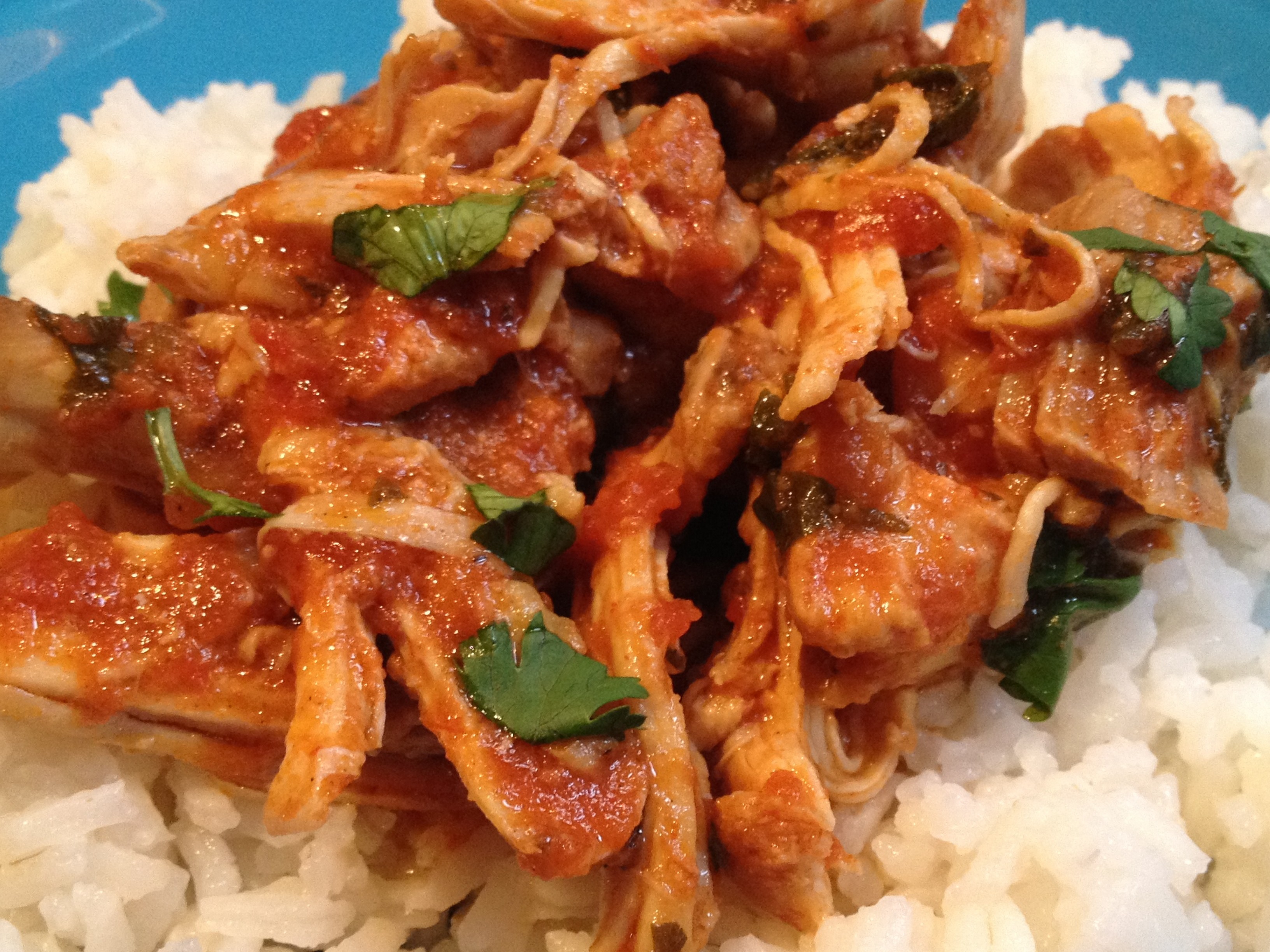
This recipe has all of my winning elements: crock pot, flavorful, easy. Added bonus: My whole family loved it. The only change I made is that I used boneless chicken thighs, as I absolutely hate boneless breasts done in the crock pot. I firmly believe that if you are crockpotting chicken, you either need to go for bone-in breasts or boneless thighs. Not everyone agrees with me, but I feel compelled to share this opinion with you. I served this over rice with a dollop of sour cream, and it was perfect. The author suggests using it for chicken tacos, and I think that’s a brilliant idea.

Cilantro Lime Chicken for the Crockpot (original recipe by Megan from Pip & Ebby here)

In crock pot, mix together:

One 24-ounce jar medium or mild salsa

Juice from one lime

1/4 cup fresh cilantro, chopped

One 1.25-oz. package taco seasoning

2 jalapeno peppers, finely chopped (optional)

2 to 3 pounds of boneless chicken thighs or 3 – 4 bone-in chicken breasts

Directions:

Mix together first five ingredients in crock pot. Cover chicken with mixture. Cook on low for 4 to 6 hours. Shred chicken with a fork (removing any bones if necessary) and return to the crock pot for at least another 20 minutes. Serve with rice or as a taco filling. Top with more fresh cilantro.

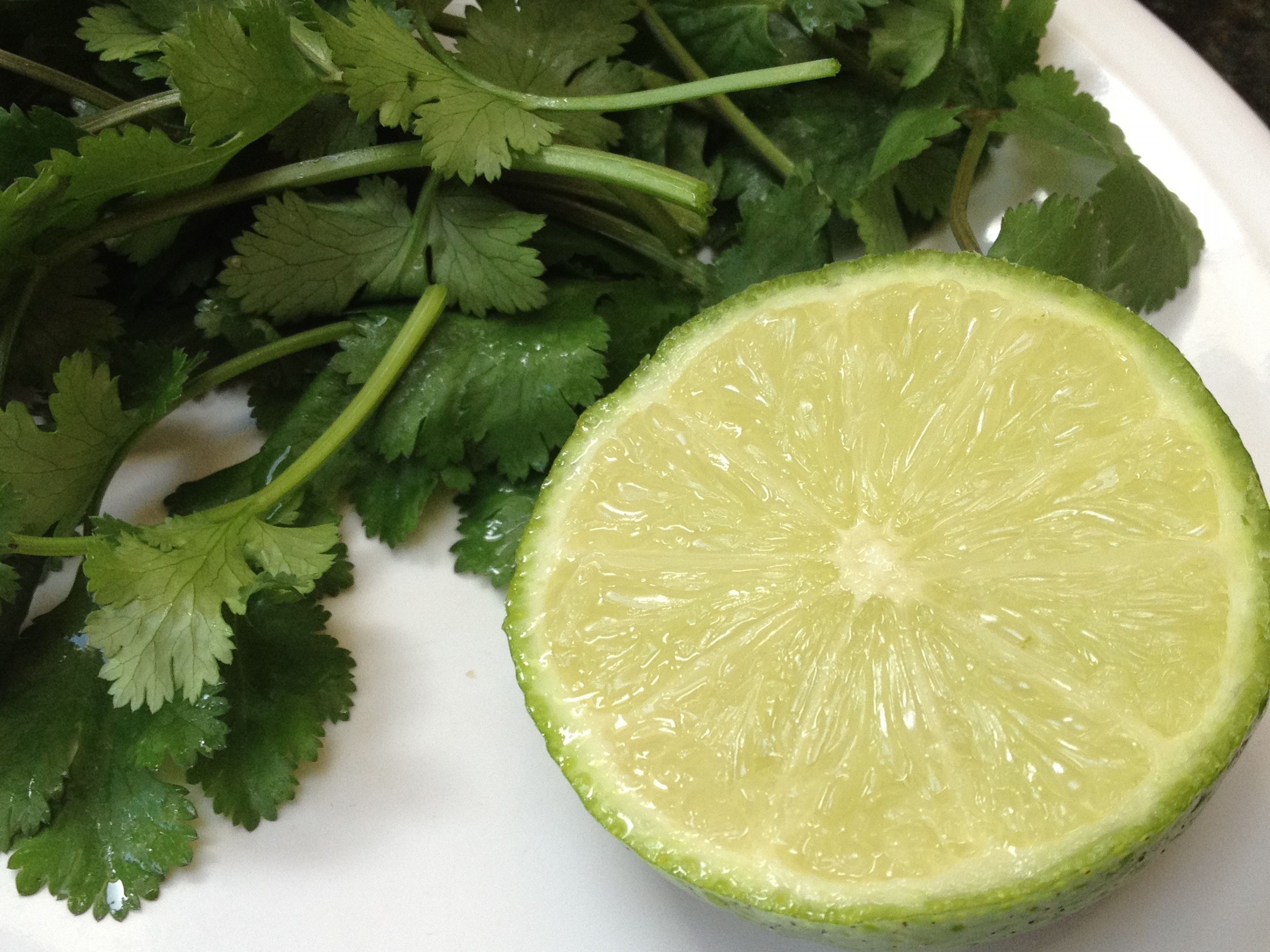
I have a thing for cilantro and try to grow some every year. This should be ready in a few more weeks.

I also have a thing for limes, lemons’ classier green cousins.

Uncle Larry’s Teriyaki Steak

I love getting mail! I was thrilled to open my mailbox last week and find several recipes sent from my dear aunt (and Mom Mom’s daughter). She wrote:

Dearest Dawn,

When Uncle Larry was in his early 20’s, he lived with a girl in Hawaii and they had a cook (Japanese) and before he left, she gave him these recipes.

I never knew this about my uncle, and once again I was reminded that most people have lived lives beyond the ones we know. Before we became stable, upstanding citizens and parents, many of us had quite an interesting and colorful past. Myself included. But those are tales for another day.

I always knew my uncle was a great cook, because my mother raved for years about how he cooked dinner for her and my aunt after my cousin was born and my mom was sent up to New Hampshire to help out with the new baby duties. Of course, Mom’s standards — no offense, Dad — were pretty low, and I’m sure anything beyond a bowl of cereal and milk was mighty impressive to her. Anyway, the surprise to me was not that my uncle (or any man) can cook, but that he lived in Hawaii. I have a bit of a Hawaii fixation, and we will definitely be discussing that another day.

I am always so honored when people take the time to share their favorite recipes with me, and I promise you I will eventually try them all. In April, I will be making a coconut cake from one of my mom’s oldest friends. But tonight, it is Uncle Larry’s Teriyaki Steak from 1970’s Hawaii. It is a simple little recipe, but as we all know, simple things are often the most delicious. I served this tonight with sauteed green peppers, onions and rice. The verdict was strongly positive. Logan, 15, said it was as good as expected. Andrew, 8, and my pickiest eater in the family, said it was BETTER than he expected. Nate liked it well enough, and Ed is already asking when I can make it again. In this family, that’s a win.

Some notes on the recipe:

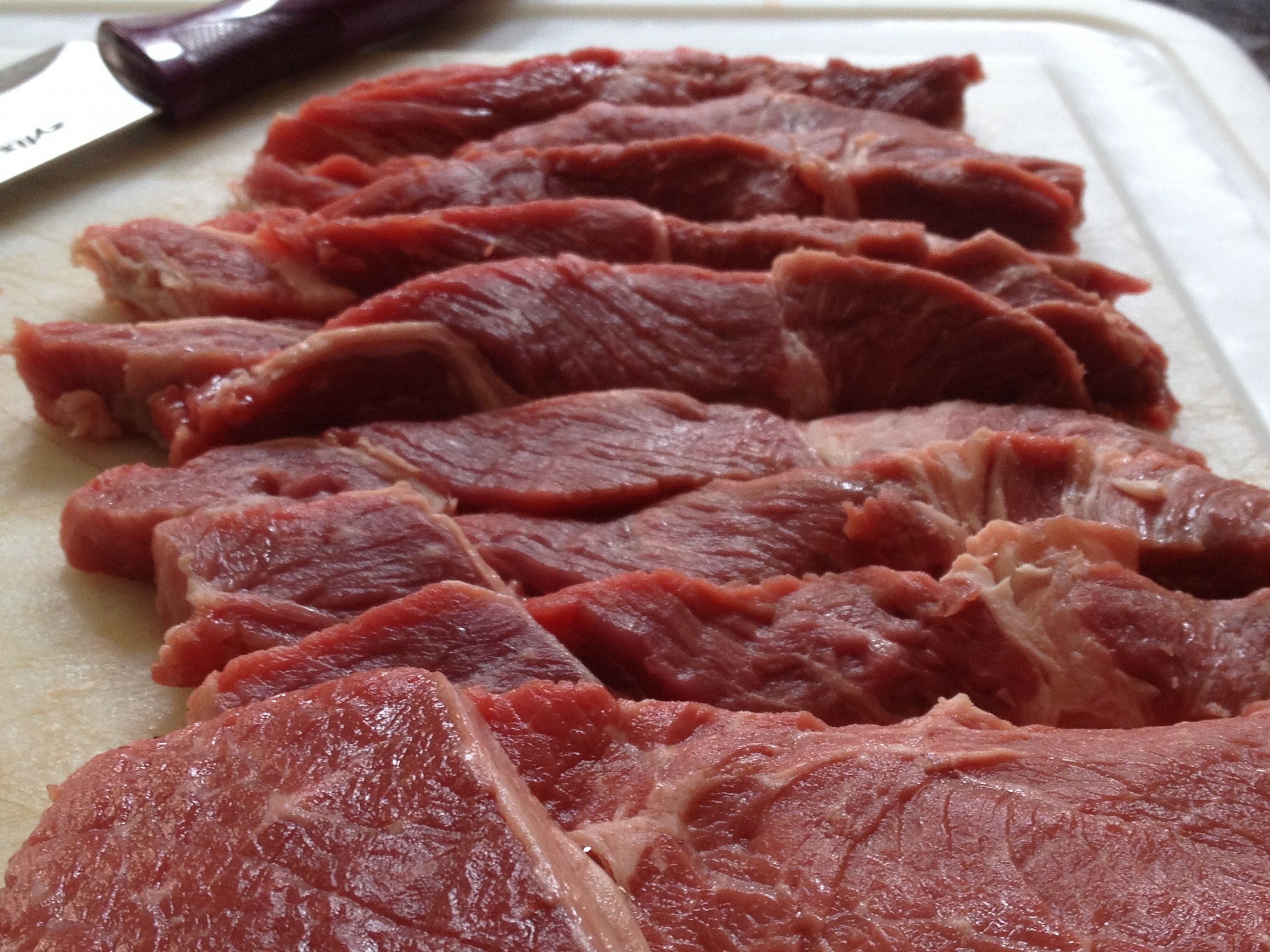
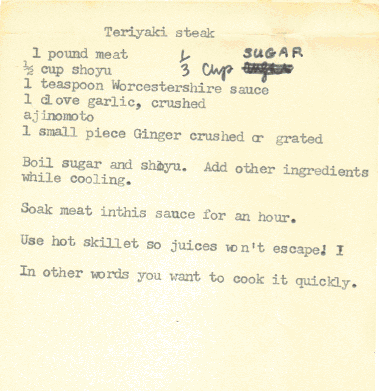
“Shoyu” means soy sauce. “Ajinomoto” is the commercial name for mono-sodium glutamate, or MSG as it’s commonly known, and we will NOT be using that, even sparingly. But in the interest of authenticity, I am including it in the recipe. I actually made two batches of this marinade: one for the peppers and onions, and one for the steak. I wanted to be able to pour some extra over the rice, and of course we know that any extra beef marinade must be discarded for safety reasons. I used about a pound and a half of a boneless top round sirloin. I also sprinkled some roasted sesames on my serving, because I believe almost everything is better with sesame seeds.


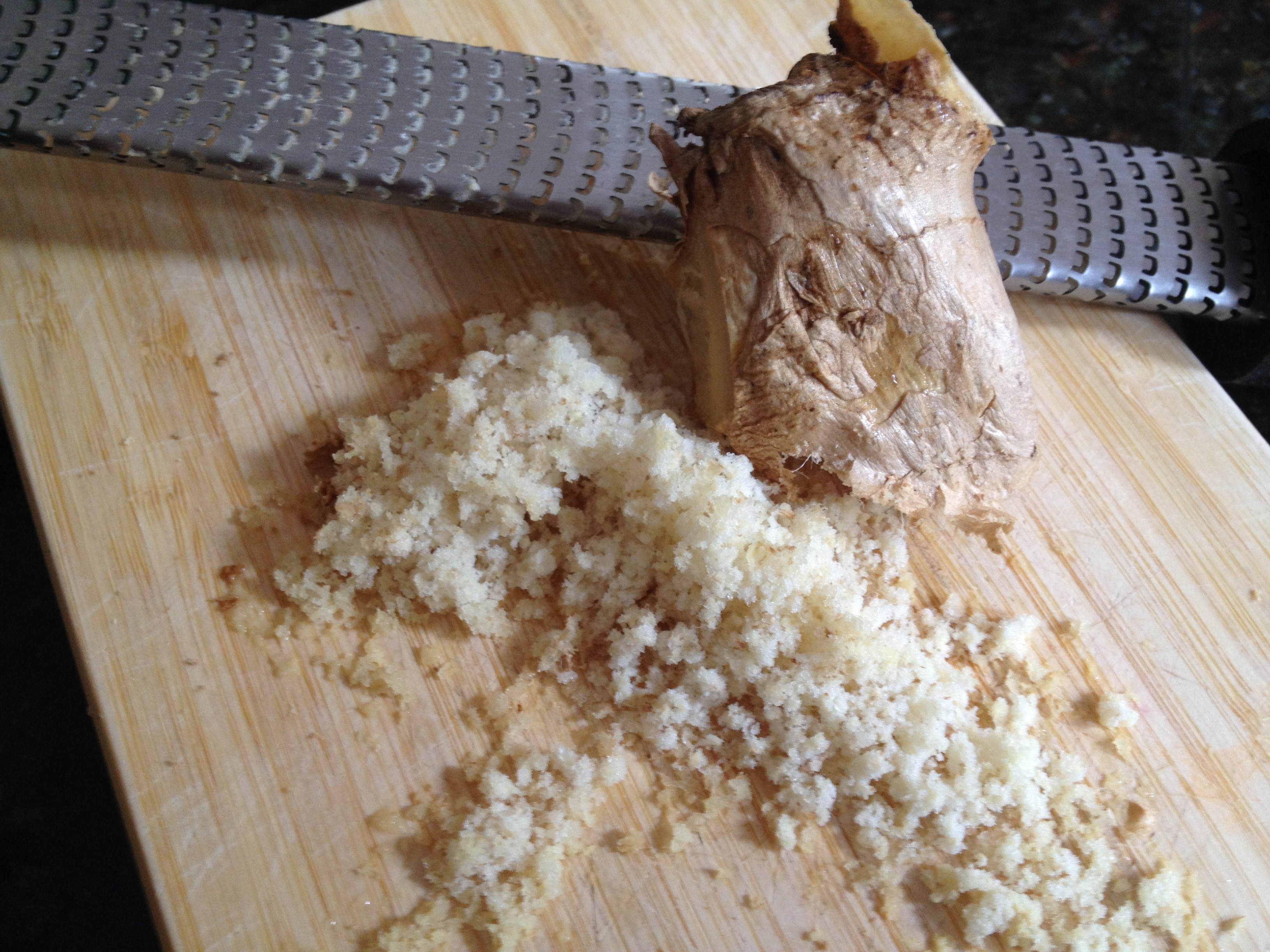
Grating fresh ginger is a breeze if you freeze it first. Even peeling is unnecessary. A Microplane grater/zester makes the job effortless. Say goodbye to bloody knuckles forever!

Uncle Larry’s Teriyaki Steak

1 pound meat

1/2 cup shoyu (soy sauce)

1/3 cup sugar

1 teaspoon Worcestershire sauce

ajinomoto (Dawn did not use and does not recommend)

1 small piece of ginger, crushed or grated

Boil sugar and soy sauce. Add other ingredients while cooling. Soak meat in this sauce for an hour. (Dawn used a Ziplock bag and marinated for about two hours). Use hot skillet and cook quickly (Dawn used some olive oil in the skillet, too).

The original recipe is shown below, and I just love that it was kept for all these years. I hope you enjoy this as much as my family did.

Lasagne for Dummies

If you grew up making your own pasta or assisting your Italian grandmother while she skillfully prepared Sunday dinner, move along. This recipe isn’t for you.

This is for all of the people who are intimidated by the awesome Italian architectural splendor that is lasagne and have thought, “Nope, can’t do it. Too complicated.” I’m here to tell you that you CAN do it, and it’s really quite simple, assuming you follow certain elementary procedures. And unlike me, you don’t have to wait until you’re 35 to try this for the first time.

The number one secret is this: Barilla No-Boil Lasagne Noodles. Secondly, use a good sauce. Either make your own or cough up the big bucks and buy two decent jarred ones (hint: not Ragu or Prego). The sauce is important, yet very forgiving at the same time. I usually just open a jar of crushed tomatoes and start adding a little of this and a little of that like a crazy mad scientist, and eventually I stop once I like how it tastes.  Finally, do not skimp on the cheese. When it comes to lasagne, I am definitely from the More is Better school of cheese distribution.

Maybe because I am rapidly developing old lady eyes, or maybe because the writing is legitimately too small, but I always have the worst time reading the back of the box instructions. I am going to lovingly type them out here, both for your benefit and for mine. Remember, be creative! Put your own personal stamp on this lasagne, whether it’s a splash of red wine, some crushed red pepper, extra veggies, pancetta instead of ground beef — or all of the above.

These lovely rainbow readers are the last gift Mom Mom gave to me. I couldn’t read the box without them! She had a matching pair. I have reading glasses planted everywhere throughout my house.

Barilla Four Layer No-Boil Lasagne

Ingredients:

1 box (16 sheets) Barilla No-Boil Lasagna Noodles
1 lb. ground beef or ground sausage, cooked to crumbles and drained
2 jars Barilla Marinara sauce (OR your own, which I suggest)
2 eggs
4 cups shredded mozzarella cheese
15 oz. container ricotta cheese
1/2 cup grated Parmesan (or similar) cheese

IMPORTANT: If using a 2-inch deep pan (such as the 13 x 9 Pyrex which I use), make only 3 layers to avoid boiling over. Use the same amount of filling, just distribute it evenly.  If using meat, add it to your sauce, OR do it the Barilla way, which involves adding it above the ricotta mixture. Both work fine.

In medium bowl, beat two eggs, and combine with ricotta with 2 cups of the mozzarella and 1/2 cup grated parmesan.  Set aside.

Spray pan with cooking spray.
Layer 1:  Spread 1 cup of marinara sauce in pan.  Cover with 4 noodles, overlapping a bit as necessary.  Spread with 1/3 of the ricotta cheese mixture.  Layer half the meat over top. Sprinkle with 1 cup mozzarella. Spread 1 cup marinara over that.

Layer 2:  Cover first layer with 4 more noodles.  Spread with next 1/3 of the ricotta mixture.  Spread 1 cup marinara over that.

Layer 3:  Cover 2nd layer with 4 more noodles.  Spread last 1/3 of the ricotta mixture.  Layer last half of the meat over that.  Spread with 1 cup marinara.

Layer 4:  Cover 3rd layer with last 4 noodles.  Spread remaining marinara over top, completely covering noodles.  Sprinkle last 1 cup of mozzarella over top.

Cover pan with aluminum foil.  Bake at 375 degrees F for 50-60 minutes or until bubbling.  Remove foil and bake for another 10 minutes.

Let stand for half an hour before cutting.

Twice-Baked Sweet Potatoes with Leeks and Sausage

Fat potatoes for Fat Tuesday!

I don’t know how I originally overlooked this recipe back in the fall, but I was very excited to try it this week, as it contains all my favorites in one neat little package. Sausage? Check. Leeks? Check. Sour cream? Check. Sweet potatoes? Check. Fancy cheese? Check.

Depending upon your portion size and your appetite, this works equally well as a main dish or a side dish. It feels like a very strong side dish, so I would pair it with something on the plainer side like roasted chicken or broiled fish.

Twice-Baked Sweet Potatoes with Leeks and Sausage by Martha Holmberg, Fine Cooking, October 2011 (printable recipe here)

Ingredients

4 small sweet potatoes (about 8 oz. each)
1 Tbs. olive oil
1/2 lb. bulk sweet Italian sausage (or link sausage, casings removed)
1 Tbs. unsalted butter
1 lb. leeks, white and light-green parts only, quartered lengthwise and thinly sliced (about 2 cups)
1 tsp. chopped fresh sage
1/4 tsp. chopped fresh thyme
Kosher salt
1/2 cup sour cream
1/4 cup grated Gruyère

Directions:

Position a rack in the center of the oven and heat the oven to 375°F. Line a heavy-duty rimmed baking sheet with parchment or foil.

Poke the sweet potatoes a few times with the tip of a knife and arrange them on the baking sheet. Bake until completely tender when pierced in the fattest part with a skewer, 35 to 60 minutes.

Meanwhile, heat the oil in a 10-inch skillet over medium-high heat. Add the sausage, reduce the heat to medium, and cook, breaking it into small bits with the edge of a slotted spoon, until no longer pink, 5 to 6 minutes. Transfer to a plate and set aside.

Pour off all but 1 Tbs. of the fat and add the butter. When it melts, add the leeks, sage, thyme, and 1-1/2 tsp. salt. Cook, stirring stirring, until the mixture just starts to sizzle. Reduce the heat to low and cook, stirring frequently, until the leeks are very soft and starting to turn golden, 10 to 15 minutes.

When the sweet potatoes are cool enough to handle, carefully cut them in half lengthwise and gently scoop the flesh into a medium bowl, leaving about 1/8 inch of flesh in the shells. Mash the scooped flesh with a fork or potato masher until smooth. Stir in the sour cream and 1 tsp. salt. Fold the sausage and leeks into the mashed sweet potato and season to taste with salt.

Position a rack 6 inches from the broiler element and heat the broiler on high. Mound the filling into the potato skins and top with the cheese. Put the potatoes in a 9×13-inch baking dish and broil until the cheese is golden, about 4 minutes. Serve immediately.

Ready to go in the oven.

Easiest and Best Pizza Dough

Oh, how I wish I didn’t love pizza. While I may never look like a supermodel, I do believe if not for pizza I could actually be the weight of a supermodel. Alas, it will never happen. I will never break up with pizza, even though he is an abusive boyfriend who sometimes makes me feel very, very bad about myself. Pizza and I have a pathetic, unhealthy, codependent relationship, and I’ve made my peace with that.

As you can imagine, I have tried every version of a homemade pizza crust under the sun, and I have determined that this recipe from Giada is the very best of the bunch. Giada calls this crust tender, and I think that’s the perfect description. I realize that pizza is a very personal thing. In reading the reviews, I see that not everyone loves this recipe as much as I do, but keep in mind the reviews are overwhelmingly positive. Personally, texture counts for everything in my pizza crust, and I consider it a blank canvas for my toppings.  I am not looking for any strong flavors, and that seems to be the biggest criticism of the negative reviewers — not flavorful enough. To them, I say, “Try Domino’s.” Did I mention I’m also an opinionated snob?

The strange part about this recipe is that it does not mention oven temperature or cooking time. On my original torn-out Bon Appétit magazine page in my binder, I have “Bake at 475 for about 15 minutes” written in pen. I am not sure where I came up with that, or why there are no instructions on the link I provided. Isn’t that strange? Anyway, I usually preheat a pizza stone, bake the dough for about five minutes, then add the toppings and put it back in the oven for another ten minutes.

Pizza Dough by Giada DeLaurentiis, Bon Appétit, March 2007

Printable recipe here

Ingredients

3/4 cup warm water (105°F to 115°F)
1 envelope active dry yeast
2 cups (or more) all purpose flour
1 teaspoon sugar
3/4 teaspoon salt
3 tablespoons olive oil

Preparation

Pour 3/4 cup warm water into small bowl; stir in yeast. Let stand until yeast dissolves, about 5 minutes.

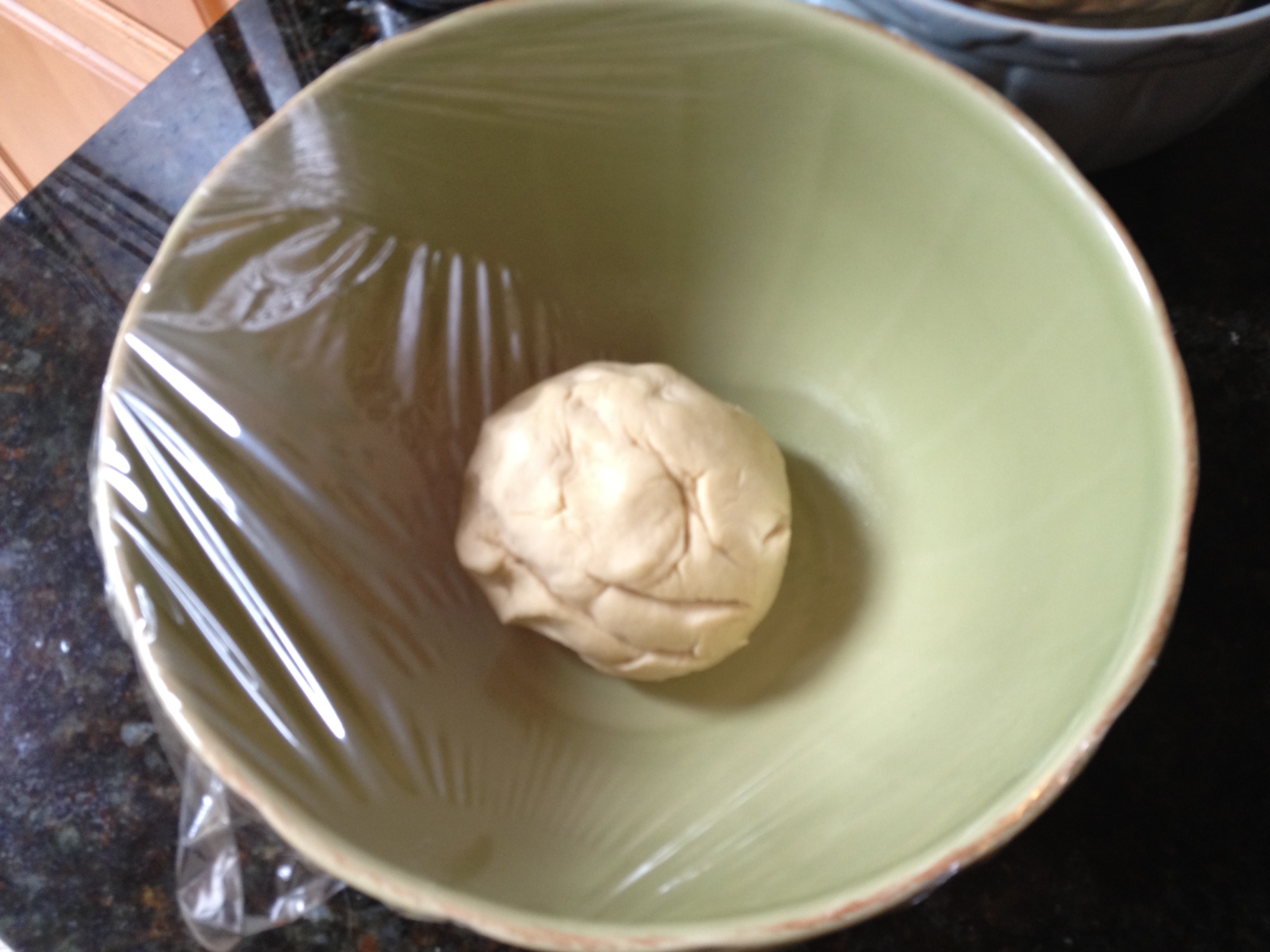
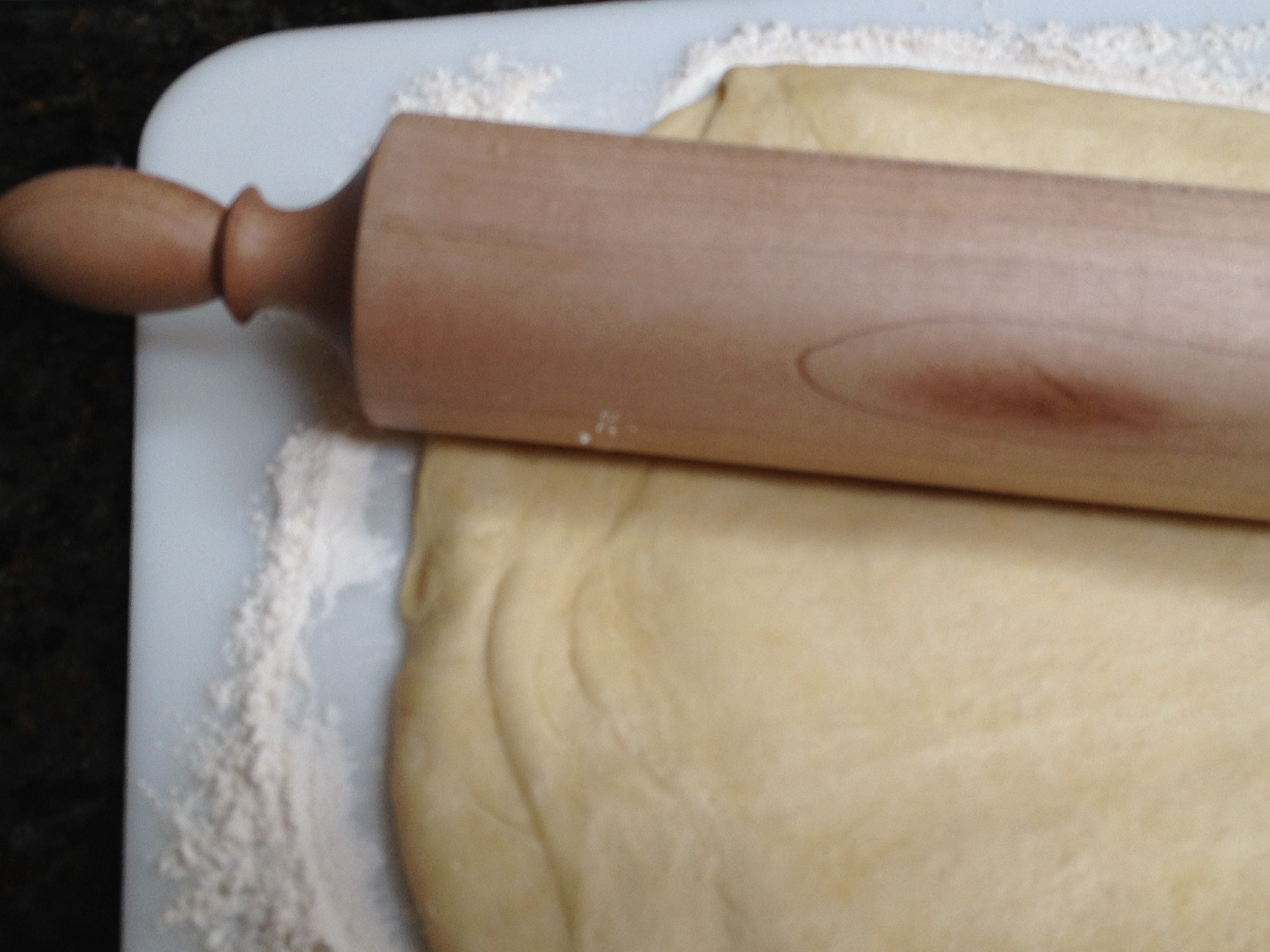
Brush large bowl lightly with olive oil. Mix 2 cups flour, sugar, and salt in processor. Add yeast mixture and 3 tablespoons oil; process until dough forms a sticky ball. Transfer to lightly floured surface. KNEAD dough until smooth, adding more flour by tablespoonfuls if dough is very sticky, about 1 minute. Transfer to prepared bowl; turn dough in bowl to coat with oil. Cover bowl with plastic wrap and let dough rise in warm draft-free area until doubled in volume, about 1 hour. PUNCH down dough. DO AHEAD Can be made 1 day ahead. Store in airtight container in refrigerator. ROLL out dough according to recipe instructions. (Start in center of dough, working outward toward edges but not rolling over them.)

You can see how the dough has doubled in size in one hour. Now it’s ready to punch down and roll out.


Can we please admire this beautiful maple rolling pin from Vermont Rolling Pins? Hand crafted and made in Vermont.

Few things make me happier than pepperoni pizza.

Super Quick Minestrone

This is called Super Quick Minestrone, but it probably should be called Not Overly Time Consuming Minestrone instead. “Super quick” feels like a bit of an exaggeration. There is a fair amount of chopping and babysitting of ingredients in this recipe. I wasn’t expecting to microwave a can of Progresso and call it a day or anything, but I guess my concept of “super quick” differs with the author’s. Semantics aside, it still is a very lovely minestrone and the only one I bother to make these days, so that has to count for something.

You may notice in my picture that the zucchini looks a lot like green beans and that the shell shaped pasta is not a tube shaped pasta. It is also a very forgiving minestrone which is open to improvisation and substitution. However, I do strongly recommend sticking to the pancetta if possible.

Super Quick Minestrone by Michael Chiarello (printable recipe here)

Ingredients

  • 1 cup (4 ounces) tubetti pasta, or other small pasta shape
  • Extra-virgin olive oil
  • 6 cups chicken stock
  • 1/4 pound pancetta, cut into 3 pieces
  • 6 medium garlic cloves, each cut in 1/2 lengthwise
  • 2 cups finely chopped yellow onions (2 small onions)
  • 1 cup small-diced celery (2 medium stalks)
  • 1 cup small-diced carrots (2 to 3 medium carrots)
  • 1 tablespoon finely chopped rosemary or thyme leaves
  • 1 (14-ounce) can cannellini beans, drained and rinsed
  • 1 (14 1/2-ounce) can diced tomatoes
  • 4 cups small-diced zucchini (green/yellow) (5 small zucchini)
  • 2 cups small-diced, peeled russet potatoes (1 large russet)
  • Salt and freshly ground black pepper
  • 1 cup freshly grated Parmesan

Directions

Bring a large pot of salted water to a boil over high heat. Add the pasta and cook according to package directions until al dente. Drain and transfer the pasta to a baking sheet. Toss the pasta with a little olive oil to prevent sticking.

In a large saucepan over medium heat, warm the chicken stock.

In another large saucepan over high heat, heat 1/4 cup oil. When the oil is hot but not smoking, add the pancetta and cook until it begins to brown, 3 to 4 minutes, turning occasionally. Add the garlic and cook until it begins to brown, about 1 minute, stirring occasionally. Lower the heat to medium and add the onions, celery, and carrots.

Cook until the vegetables are soft, 8 to 10 minutes, stirring occasionally to prevent browning. Add the chopped herbs. Raise the heat to high. Add the beans, tomatoes, zucchini, and potatoes. Add the chicken stock and bring to a boil. Then bring it down to a simmer and cook until the potatoes are tender, 12 to 15 minutes, skimming any foam off the top of the soup. Season generously with pepper. Add salt, to taste. Just a few minutes before serving, add the cooked tubetti pasta. Serve warm with Parmesan and olive oil passed at the table.

Cooking notes: Add the cooked pasta just before serving. If it sits in the soup too long, it develops a flabby texture. Tubetti (little hollow tubes) are the classic pasta for minestrone, but you could substitute another small shape of pasta.

Laura Calder’s Beef Bourguignon

At lunch a few weeks ago, my friend Amy mentioned that she really enjoys Laura Calder’s Cooking Channel show, French Food at Home. Never heard of it, I said.

For a person who makes her living food blogging (ha! yes, that was a joke), it is stunning how little I know. Honest to God, I had no idea such awesomeness existed. But when Amy appealed to my narcissistic tendencies and told me that Laura Calder reminded her a little bit of me, I ran right home to DVR the show toute de suite!

As one of my best friends, Amy clearly sees me through very kind and loving eyes, for I am nowhere near as attractive and competent as Laura Calder. However, I did recognize that we share a certain dorky enthusiasm, passion, sincerity, and slightly know-it-all demeanor which I’d like to believe inspires more confidence than irritation. Needless to say, I think she’s fabulous!

A couple years ago I made Julia Child’s Boeuf Bourguignon, and it was every bit as complex and wonderful as all the hype. However, it is a heck of a lot of work. Don’t plan to do anything else besides eat and do dishes the day you try to make it Julia’s way. I encourage everyone to try it at least once for the experience, but I was personally in no hurry to spend hours in the kitchen making it again despite numerous requests from Ed. When I saw Laura’s version of Beef Bourguignon, I was intrigued. It seemed so…relatively simple!

Verdict? A very worthy Beef Bourguignon. All of the flavor, less than half of the work. I can’t imagine making this any other way now. Sorry, Julia, I still love you!

Laura Calder’s Beef Bourguignon (printable recipe here)

Ingredients

  • For the stew
  • 4 pounds boneless stew beef, such as chuck or sirloin tip, cut into large chunks
  • 2 tablespoons pork fat or olive oil, plus more if needed
  • 2 carrots, peeled and halved
  • 2 onions, peeled and halved
  • 4 cloves garlic, just crushed
  • 1/4 cup all-purpose flour
  • 1 (750ml) bottle red wine (Dawn used a ten dollar cabernet sauvignon — nothing fancy)
  • 4 cups beef stock
  • 1 bouquet garni (made from bay leaf, parsley stems, and thyme sprigs)
  • For the garnish
  • 1 tablespoon olive oil, plus more if needed
  • 6 to 8 slices bacon, cut into lardons
  • 40 baby onions, peeled
  • 16 ounces mushrooms

Directions

Preheat the oven to 325 degrees F.

Remove the meat from the refrigerator and bring to room temperature, about 20 minutes.

Heat the oil in a large casserole. Working in batches, brown the stew meat well on all sides, removing as you go. When the meat is done, cook the carrots and onions in the same pot until tender and lightly golden. Add the garlic, and cook one minute. Add the flour and cook, stirring for 2 minutes. Pour over the wine and the stock. Add the bouquet garni. Return the meat to the pot, cover, and transfer to the oven until the meat is very tender, about 2 hours.

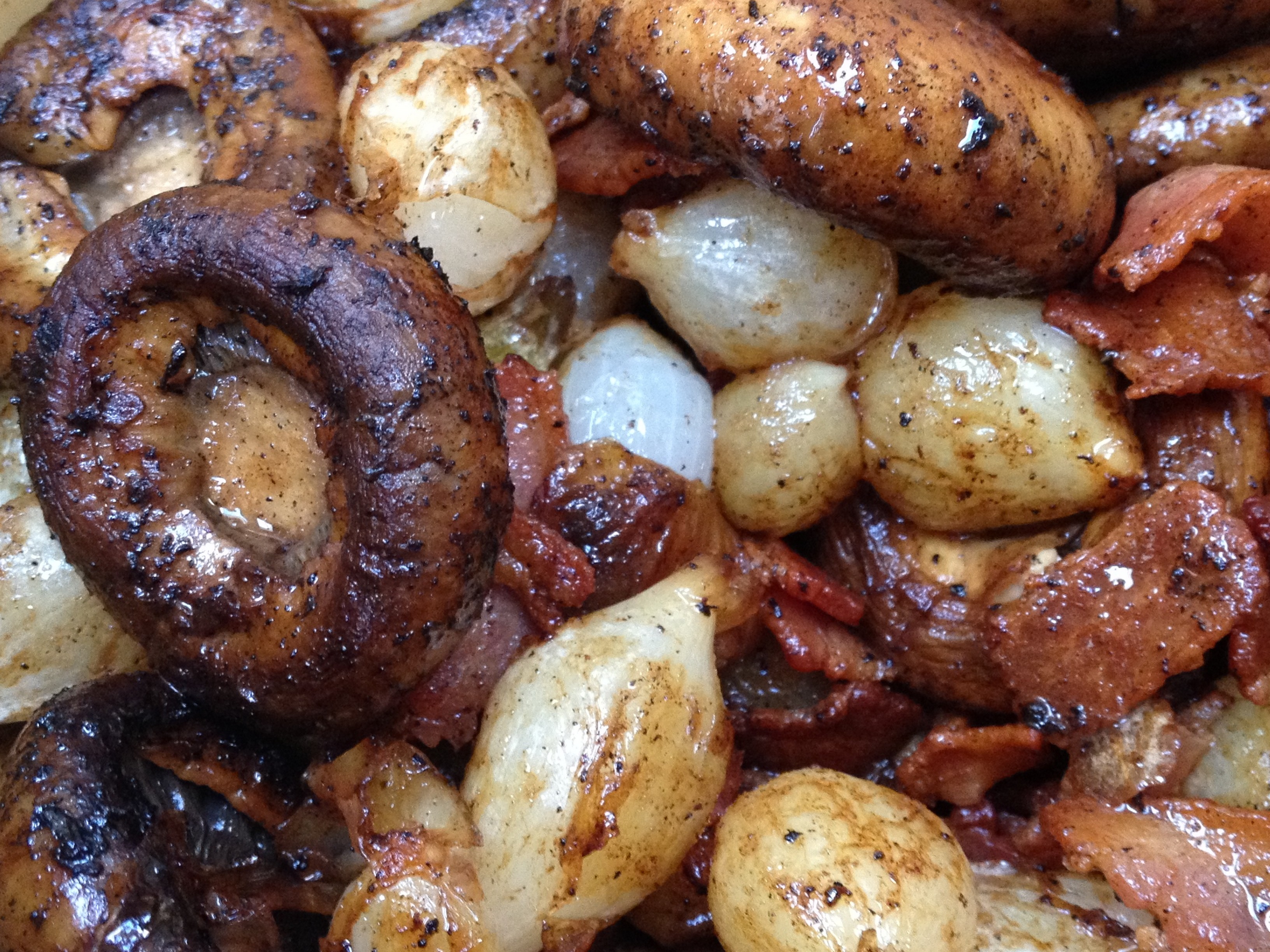
While the meat cooks, prepare the garnish: Heat the oil, in a pan and brown the bacon, and remove. Add the onions and cook until browned all over, remove. Finally, brown the mushrooms, and remove. Deglaze the pan with 1/2 cup water, reduce, and then pour over the garnish. Set aside.

When the meat is done, remove it from the pot. Strain the stock, discarding the vegetables. Pour the liquid back into the pot, and boil until thick enough to coat a spoon. Return the meat to the pan and add the garnish. Cover, and simmer until the onions are tender and the flavors have blended, 10 minutes. Adjust the seasonings. Serve.

Does anything make you feel so French as tying herbs in a bow and saying “Bouquet Garni” to all who will listen?

The garnish of bacon, mushrooms and pearl onions which gets added at the end.

Voila! What it lacks in beauty, it makes up for in deliciousness.

Ina Garten’s Lemon and Garlic Roast Chicken

I will admit I was a bit skeptical about this recipe when my friend Tess insisted that it created the perfect roasted chicken. The wine, the lemons, ALL THAT GARLIC, and most of all, the bacon? I just didn’t know. I do love all of those ingredients separately (and God knows I love bacon to the point of unhealthiness), but I had my doubts that they would work in their stated quantities and on a chicken. Tess has never steered me wrong, and rarely has Ina, so I gave it a shot. I am so glad that I did! It really did produce a wonderful roasted chicken with skin both crispy and flavorful.

Personally, I loved the gravy. My kids weren’t crazy about it due to the wine (philistines! what do they know, anyway?) and it is definitely jazzier than your traditionally flavored chicken gravy, so next time I make this I will just buy a jar of whatever is on sale for the kids. The chicken itself was moist and tender. Roasted chicken is a big family favorite around here, and this recipe is definitely a keeper.

Ina Garten’s Lemon and Garlic Roast Chicken (original recipe here)

Ingredients

  • 1 (5 to 6-pound) roasting chicken
  • Kosher salt
  • Freshly ground black pepper
  • 1 large bunch fresh thyme
  • 4 lemons
  • 3 heads garlic, cut in 1/2 crosswise
  • 2 tablespoons butter, melted
  • 1/2 pound sliced bacon
  • 1 cup white wine
  • 1/2 cup chicken stock

Directions

Preheat the oven to 425 degrees F.

Remove the chicken giblets. Rinse the chicken inside and out. Remove any excess fat and leftover pinfeathers and pat the outside dry. Place the chicken in a large roasting pan. Liberally salt and pepper the inside of the chicken. Stuff the cavity with the thyme, reserving enough thyme to garnish the chicken dish, 1 lemon, halved, and 2 halves of the garlic. Brush the outside of the chicken with the butter and sprinkle again with salt and pepper. Tie the legs together with kitchen string and tuck the wing tips under the body of the chicken. Cut 2 of the lemons in quarters and scatter the quarters and remaining garlic around the chicken. Lay the bacon slices over the chicken to cover.

Roast the chicken for 1 hour. Remove the bacon slices from the top of the chicken and set aside. Continue roasting the chicken for an additional 1/2 hour, or until the juices run clear when you cut between a leg and thigh. Remove to a platter and cover with aluminum foil while you prepare the gravy.

Remove all but 2 tablespoons of the fat from the bottom of the pan. Add the wine and chicken stock and bring it to a boil. Reduce the heat, and simmer for 5 minutes, or until reduced by half.

Slice the chicken on a platter. Garnish the chicken platter with the bacon slices, roasted garlic, reserved thyme and 1 lemon, sliced. Serve with the gravy.

This is what the chicken looks like after one hour with the bacon on it. Not very appetizing, I know. But you just wait…

This is what the chicken looks like once it’s finished cooking. Beautiful, eh? Tess, Ina and Mom Mom know what they’re talking about.